Apps

Andrew Kim
9 min read
The best free pomodoro app depends on what happens when you quit at minute nine
Nine free pomodoro apps compared on what each does when you stop early: Pomofocus in a browser, Be Focused on Apple, Focus To-Do on Android.
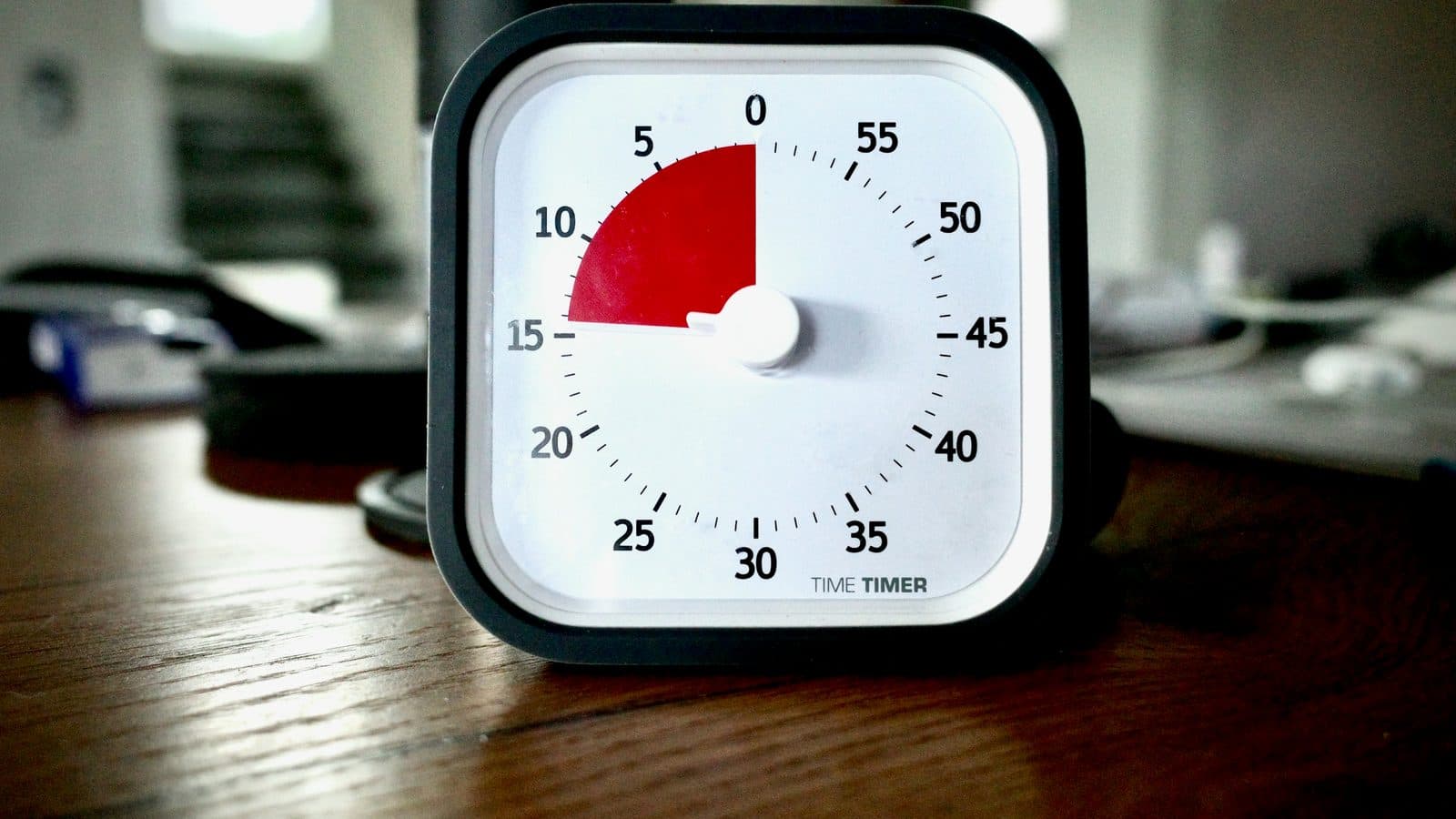
You stop at minute nine. The timer still says sixteen minutes, and either something came up or nothing came up and you just could not stay in it. What the app does in the next two seconds is close to the only thing that separates one free pomodoro timer from another, and every list of the best free pomodoro app leaves it out.
They leave it out because free is boring here. A countdown with a five-minute break attached is a weekend project, which is why there are hundreds of them and why almost all of them cost nothing. Sorting free timers by feature count tells you which developer wrote the longest App Store description. That is not a ranking.
One disclosure before the table. We make Kudos, a free to-do app with a focus timer in it, so we have a stake in this category. Kudos sits in the comparison with its limits spelled out, and for most people reading this a dedicated pomodoro app is the better answer.
The technique's own answer is that an interrupted pomodoro never happened
Francesco Cirillo wrote the rule down in 2006. It sits in the guide that gave the method its name: "If a Pomodoro is definitively interrupted by someone or something, that Pomodoro should be considered void, as if it had never been set; then you should make a fresh start with a new Pomodoro." The rules summary at the back of Cirillo's original guide is blunter. An interrupted pomodoro is "considered void, never begun, and it can't be recorded with an X."
So the technique deletes your nine minutes. No partial credit, no half pomodoro, nothing in the log, which reads as punitive until you get to the last rule printed on the same page: "The Next Pomodoro Will Go Better."
Barely any app below implements either half of that. Most keep the nine minutes and file them in a chart, which is the opposite of the rule and probably the right call for something you carry in your pocket. Two punish you instead, and one of those will charge your card.
Free is the floor in this category, so it cannot be the ranking
Here is the short answer. Use Pomofocus if you want a free pomodoro timer in a browser with nothing installed, Be Focused on an iPhone or a Mac, Focus To-Do on Android or on a mix of Windows and Apple machines, and Forest if what you actually need is for quitting to cost you something. All four are usable for years without paying.
Two questions decide it. What does the app do at the moment you quit, and what does it still have to show you a month later? Free tiers are generous with the first and stingy with the second, because your history is the part they can charge for later. It is the pattern I found in the free habit trackers for iPhone, where the cap lands on habit number four and on last month's grid rather than on the tracking itself.
Nine free pomodoro apps, and what quitting early costs you in each
Every figure below came off the developer's own pricing page or store listing on 26 August 2026. Prices here move fast, and half the roundups quoting them are two years stale, which is why each number carries the day I read it. Check them yourself.
| App | Platforms | What free gives you | Paid | What happens when you quit at minute nine |
|---|---|---|---|---|
| Pomofocus | Web, plus Mac, Windows and Linux downloads | Timer, task list, day, week and month reports, 3 templates, ads | No price published on its own site | Nothing. Reset and start again |
| Focus To-Do | iOS, Android, Mac, Windows, iPad, Watch, Wear OS | Timer, tasks, reports, sync across all of them | $3.99 for three months, $11.99 lifetime | Nothing. Pause and resume is a listed feature |
| Be Focused | iPhone, iPad, Mac, Apple Watch | Free forever, timer, tasks, reports, ads | Pro $2.99 a month, $19.99 a year, $23.99 once | Nothing. Pause or skip the interval |
| Forest | iOS, Android, browser extensions | Timer, Deep Focus blocking, group focus, basic analytics, ads | Plus $5.99 a month or $32.49 to $35.99 a year | The tree dies and stays dead in your forest. Free accounts cannot pause at all |
| Flora | iOS, Android, Chrome | Everything, with no subscription tier to buy | Opt-in Price and Care services only | The tree dies, your friends see it, and Price charges your card if you opted in |
| TickTick | iOS, Android, web, desktop | Pomo timer, basic statistics, 9 lists | Premium $49.99 a year | Keeps the record, and lets you correct the duration on the completion page |
| Session | Mac, iOS and iPadOS only | Unlimited sessions, analytics from the past 2 days | Pro $4.99 a month or $39.99 a year | Asks what you learned, then forgets it after two days unless you pay |
| Marinara | Chrome extension | Everything, open source, no data collected | Not offered | Nothing. The extension was last updated on 20 January 2021 |
| Kudos (ours) | iOS, Android | The whole app, guest mode included | Not offered | Records that the session ran and how long it lasted |
Free tiers and prices read on 26 August 2026 from Pomofocus, Forest, Flora, Session's pricing page, TickTick's upgrade page, the Chrome Web Store, and the store listings for Be Focused, Forest and Focus To-Do.
The best free pomodoro app in a browser, and the price nobody publishes
Pomofocus is the one I keep open in a tab. Nothing to install. A task list beside the timer, an estimate of when today's list will finish, no account required, and reports by day, week and month on the free tier. Its own homepage lists what Premium adds: projects, yearly reports, a CSV download, Todoist import, webhooks, no ads, and "no template limit," which is how you learn the free tier caps templates at three.
What Premium costs is a genuine mystery. Pomofocus publishes no pricing page, and pomofocus.io/pricing returned a 404 when I checked it on 26 August 2026. Third-party trackers fill the silence and disagree with each other, quoting $2 a month in one roundup and $3 a month, $18 a year or $54 for life in another. I am not going to pick one of those and print it as fact. Read the price inside the app before you agree to it, and treat any blog that quotes a Pomofocus price with suspicion, including the ones ranking above this page.
The pomodoro Chrome extension that has not changed since 2021
If a browser tab is the right home for your timer, the lighter option is Marinara, a Chrome extension with 90,000 users and a 4.8 average from 1,600 ratings. It is open source, and the developer's Web Store declaration says it collects no data at all. Its last update was 20 January 2021.
Five and a half years without a change is a warning sign on most software and close to a feature on a countdown timer. Nothing about a twenty-five minute interval has moved on since 2021. What you get is a toolbar icon counting down, configurable intervals, twenty-odd alarm sounds and a history of completed pomodoros. What you never get is a task list.
The two apps that make quitting hurt
Forest has the biggest audience here. Apple's US listing alone carries 49,000 ratings averaging 4.8. You plant a tree, it grows while you stay in the app, and it dies if you leave. Forest's own FAQ describes the aftermath in a sentence I think is genuinely well judged: "Dead trees stay in your forest as an honest record of the journey, not a verdict."
The detail nobody mentions is what free means there. Pausing a session is a Pro or Plus feature, and Forest states plainly that "free users don't have access to pause." So on a free account the only exit from a running session is the Give Up button, which kills the tree. Deep Focus, the app blocker most competitors charge for, is free on every tier instead. Apple's listing shows Forest at free with in-app purchases, so the roundups still calling it a $3.99 iOS download are out of date, and Plus runs $5.99 a month or $32.49 to $35.99 a year.
Flora goes further than a dead tree. The app is free with no subscription to buy, tree death works the same way, and your friends are told when it happens. What separates it from everything else here is Flora Price, an opt-in service that connects your card to your focus commitment. Reporting by The Tribune, McGill University's student paper, in January 2025 put the range users set for themselves at $5 to $100 CAD per killed tree, paid to a tree-planting charity. If a self-imposed fine is the thing that gets you through an afternoon, this is the only app here offering one. If you suspect it would make you avoid starting sessions at all, trust that instinct.
The best free pomodoro app for Mac, iPhone and Android
On Apple hardware, Be Focused. Its App Store listing says it is "free to download and use forever," and free covers the timer, tasks, intervals you can pause or skip, and reports across iPhone, iPad, Mac and Watch. Pro is $2.99 a month, $19.99 a year or $23.99 once, and what it mostly buys is sync, tags and a CSV export. The free version carries ads.
Session is the better-looking Apple option and the one I would not start with. It asks what you learned when a session ends, which is the most useful question any app in this comparison asks, and then its free tier keeps "analytics from the past 2 days." Two days. An app built around reviewing your own focus, handing free users a memory shorter than a weekend, is the sharpest example of why the second question matters more than the first. Pro is $4.99 a month or $39.99 a year, Mac and iOS only.
On Android, Focus To-Do, at 10 million downloads and 284,000 reviews, updated on 27 June 2026. It runs the timer against a real task list, syncs across iPhone, Android, Mac, Windows, iPad and Wear OS, and its feature list includes pausing and resuming a pomodoro without ceremony. Premium is $3.99 for three months or $11.99 for life on Apple's listing.
If your tasks already live in TickTick, turn on the Pomo timer instead of installing anything. It is free, and it sits next to the task it is timing. TickTick is also the only app here that treats a botched session as data to be corrected rather than a verdict or a blank: its release notes describe editing the duration on the completion page when you finish early, and adding time when you carry on working past the bell. Statistics on the free tier are labelled "Basic," and Premium is $49.99 a year, which is a lot to pay if the timer is all you want from it. The Todoist and TickTick comparison weighs up everything else it does.
What the break is doing, and what it is not
The evidence for short breaks is real and smaller than the marketing suggests. Albulescu and colleagues published a meta-analysis in PLOS ONE in August 2022 pooling 22 independent samples and 2,335 people. Micro-breaks lifted vigor (d = .36) and reduced fatigue (d = .35), both comfortably significant. The effect on performance came out at d = .16 and did not reach significance, and when the researchers split performance by task type, the effect for cognitive tasks was d = -.09.
Read that before you buy anything. Five minutes off does reliably make you feel better, and there is no good evidence it makes hard thinking go faster. What a timer gives you is a bounded commitment and a count of how many you kept, which is the thing the time blocking apps throw away when they quietly reschedule the block you missed.
Which one to pick
In a browser, Pomofocus, with the price question left open until you see the number in the app. On an iPhone or a Mac it is Be Focused, and on Android or a mixed pile of machines it is Focus To-Do. If you already pay for TickTick, switch on the Pomo tab and install nothing. Forest is the pick if you want quitting to cost you a tree, and Flora if you want it to cost you money, though both are gambles on how you respond to being punished by software.
Not Kudos, which is in the table for disclosure rather than as a recommendation. Ours has a focus timer, not the interval-and-break cycle the technique describes, so there is no pomodoro in it to void.
None of these, though, if what breaks is starting rather than continuing. Minute nine is a hard problem. Minute zero, timer never started, laptop open, is a different one, and no countdown solves it, because a countdown assumes you began.
Sources
- The Pomodoro Technique (version 1.3). Francesco Cirillo, archived full text, 2006.
- "Give me a break!" A systematic review and meta-analysis on the efficacy of micro-breaks for increasing well-being and performance. Albulescu, Macsinga, Rusu, Sulea, Bodnaru and Tulbure, PLOS ONE 17(8): e0272460, August 31, 2022.
- Pomofocus, basic and premium feature lists. Pomofocus. Read 26 August 2026.
- Forest, plans and frequently asked questions. Seekrtech. Read 26 August 2026.
- Forest: Focus for Productivity. App Store listing. Prices read 26 August 2026.
- Flora, Green Focus. AppFinca. Read 26 August 2026.
- "Flora" and the price of digital discipline. The Tribune, McGill University, January 4, 2025.
- Be Focused, Deep Focus Timer. App Store listing. Prices read 26 August 2026.
- Focus To-Do: Pomodoro & Tasks. Mac App Store listing. Prices read 26 August 2026.
- Session plans and pricing. Translucent LLC. Free tier read 26 August 2026.
- TickTick upgrade page. TickTick. Free caps and price read 26 August 2026.
- What's New: focus record and Pomodoro changes. TickTick help centre. Read 26 August 2026.
- Marinara: Pomodoro Assistant. Chrome Web Store listing. Read 26 August 2026.